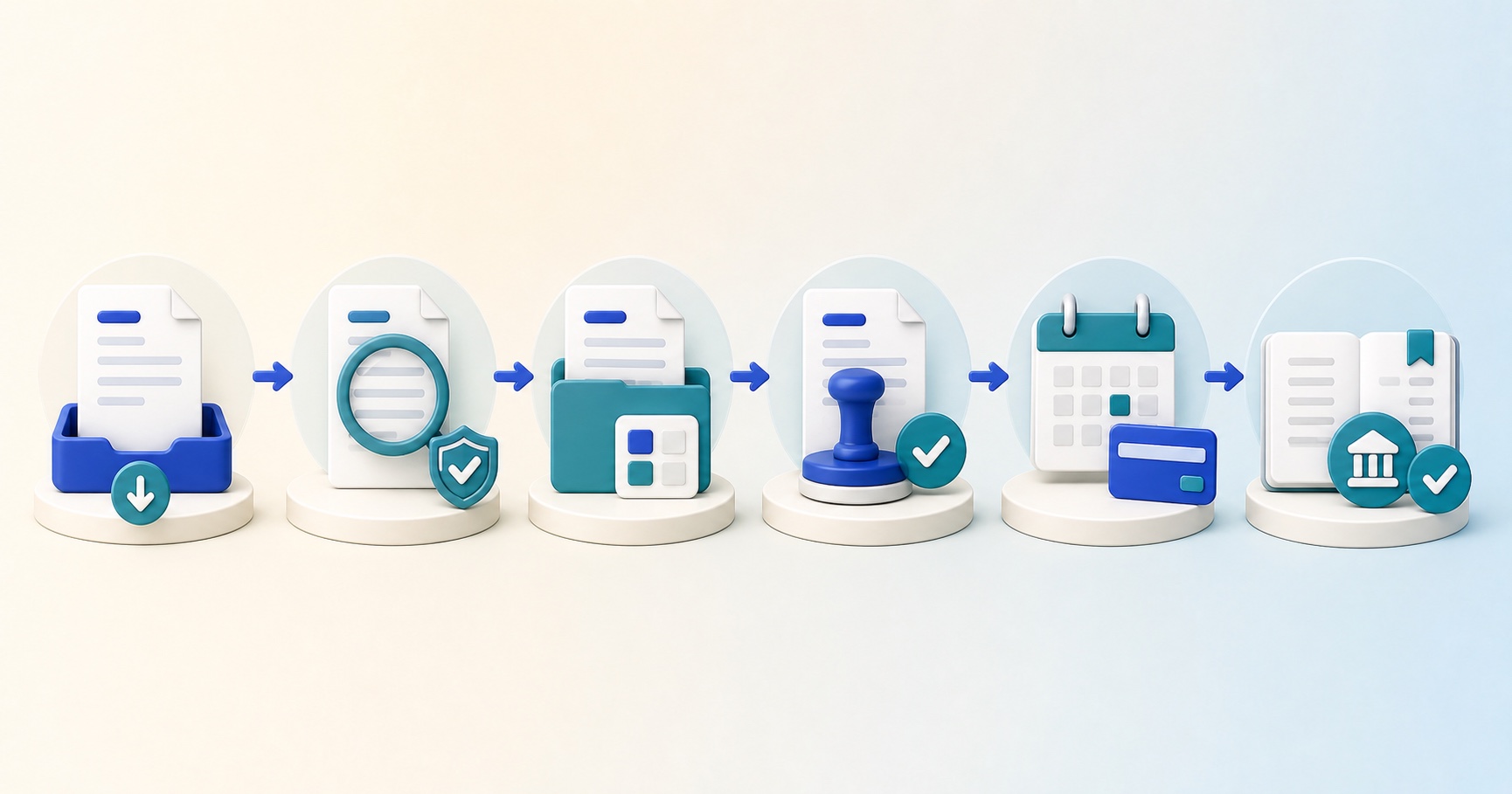
A purchase order records what a buyer authorised before the supplier invoices it. Two way PO matching compares that order with the supplier invoice so differences in supplier, item, quantity, price or total become visible before approval.
The match is a control, not a guarantee. It proves that two documents agree within defined rules; it does not by itself prove that goods arrived, services were satisfactory or the supplier's bank details are genuine.
What is a purchase order?
A purchase order (PO) is a numbered commercial document issued by a buyer to a supplier that records the goods or services authorised for purchase, normally including descriptions, quantities, prices, delivery details and terms.
The PO creates a reference shared by purchasing, the supplier, budget owner and finance. It makes approval happen before commitment and gives the eventual invoice something specific to match.
A useful PO is accurate and controlled. Blanket descriptions, missing prices or orders raised after an invoice arrives weaken the evidence. Changes should retain version history and authority rather than silently replacing what was originally approved.
How two way PO matching works
- Identify the order. Read the PO reference from the invoice or find the appropriate open order for the supplier.
- Compare the parties. Confirm the invoicing supplier and buying entity correspond to the order.
- Compare lines. Match descriptions or item codes, quantities, unit prices, discounts and tax treatment.
- Apply tolerances. Decide whether small, authorised differences can pass and which differences must stop.
- Record the result. Preserve matched lines, unmatched values, reviewer decisions and the remaining PO balance.
Matching at header total alone can hide one overbilled line offset by another underbilled line. Use line level matching where the purchasing risk or accounting need justifies it.
What should be compared?
Supplier and entity
The correct legal parties, currency and PO reference.
Items and prices
Descriptions, product codes, quantities, unit rates and discounts.
Totals and tax
Net, tax and gross values with appropriate rounding treatment.
Order availability
Open value, prior invoices, cancellation and amendment history.
Define tolerances by risk rather than convenience. A small rounding difference may be acceptable; a quantity difference on a controlled item may need investigation even when its value is low.
What happens when an invoice does not match?
The difference becomes an exception with an owner. Finance may have selected the wrong PO, the supplier may have invoiced the wrong price, the buyer may not have updated the order or a legitimate delivery may be partial.
Common outcomes include a corrected invoice, approved PO amendment, partial match, credit request, disputed line or rejection. Repeated overrides usually indicate weak purchasing data or unrealistic tolerances and should be reviewed as a process problem.
Two way versus three way matching
Three way matching provides stronger evidence for goods because it asks whether the order was received as well as invoiced. Services may use milestones, timesheets or acceptance evidence instead of a warehouse receipt.
Not every purchase needs a PO, but “non PO” should not mean “no evidence.” Define permitted categories, required approvers and the documents that support them. Continue with the complete invoice processing guide.
Keep purchase evidence with the invoice
Match invoice lines to purchase orders, surface variances and route the complete record for approval.
Frequently asked questions
What is a purchase order?
A purchase order is a numbered document issued by a buyer that records what it has authorised a supplier to provide, including items, quantities, prices and terms.
What is two way PO matching?
Two way matching compares the supplier invoice with the purchase order, normally checking supplier, item, quantity, price, currency and totals before approval.
What is the difference between two way and three way matching?
Two way matching compares the invoice and purchase order. Three way matching also checks a goods receipt or other evidence that the goods or services were received.
What happens when an invoice does not match the PO?
The difference should become an owned exception. The buyer, supplier or finance team investigates it, records the reason and either corrects the document or authorises a controlled variance.
 Published guide
 Published guide
 Published guide